Table of Contents
- Key Takeaways
- Quick Verdict
- Product Overview & Specifications
- Real-World Performance & Feature Analysis
- Design & Build Quality
- Performance in Real Use
- Ease of Use
- Durability & Reliability
- Pros & Cons
- Comparison & Alternatives
- Cheaper Alternative: A36 Mild Steel
- Premium Alternative: 4140 Alloy Steel
- Buying Guide / Who Should Buy
- Best for Beginners
- Best for Professionals
- Not Recommended For
- FAQ
When you’re searching for a 2-inch diameter 4130 steel rod, you’re likely facing one of those moments where material selection will make or break your project. I’ve been there—standing in the shop, weighing the trade-offs between cost, machinability, and strength while knowing that the wrong choice could mean wasted hours or, worse, component failure.
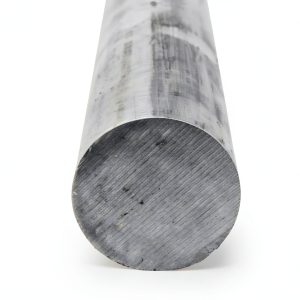
The 4130 alloy steel rod in 2-inch diameter and 12-inch length represents a specific sweet spot in the steel world. It’s not your everyday hardware store find, nor is it an exotic aerospace-only material. This normalized 4130 steel sits in that practical middle ground where serious fabricators and engineers need reliable performance without breaking the bank.
Key Takeaways
- 4130’s chromium-molybdenum composition delivers superior strength-to-weight ratio compared to common carbon steels while maintaining excellent weldability
- The normalized state significantly improves machinability—you’ll notice cleaner threads and smoother finishes versus as-rolled material
- Real-world performance excels in dynamic load applications but may be overkill for static structures where cheaper alternatives suffice
- Machining requires proper technique—the alloy content demands sharper tools and appropriate speeds to avoid work hardening
- Price premium over A36 is justified for specific applications but represents poor value for general fabrication projects
Quick Verdict
Best for: Aerospace components, high-stress structural members, racing equipment, and any application requiring excellent strength-to-weight ratio with good weldability.
Not ideal for: General fabrication projects, budget-conscious prototypes, or applications where corrosion resistance is the primary concern.
Core strengths: Balanced mechanical properties, reliable normalized microstructure, industry-standard compliance, and proven performance in demanding environments.
Core weaknesses: Price premium over basic carbon steels, requires proper machining technique, limited corrosion resistance without additional treatment.
Product Overview & Specifications
The 2-inch diameter 4130 steel rod represents a workhorse material in the alloy steel category. What sets 4130 apart is its chromium-molybdenum composition, which provides enhanced strength and toughness compared to plain carbon steels. The normalization process—where the steel is heated to a specific temperature and air-cooled—creates a more uniform microstructure that translates to consistent machining characteristics and mechanical properties throughout the entire length.
In practical terms, this means you won’t encounter the hard spots or variable hardness that can plague cheaper steel bars. For anyone who’s ever snapped a tap or experienced uneven tool wear while machining, this consistency matters more than any spec sheet can convey.
| Specification | Details |
|---|---|
| Material | 4130 Alloy Steel |
| Diameter | 2 inches |
| Length | 12 inches |
| Condition | Normalized |
| Standards | ASTM-A108, AMS-6348, AMS-6370, AMS-6758 |
| Typical Tensile Strength | ~81,200 psi |
| Typical Yield Strength | ~52,600 psi |
| Typical Elongation | ~28% |
The standards compliance is particularly important for professional applications. Meeting AMS-6348 and other aerospace specifications means this material has undergone rigorous testing and quality control—something I’ve learned to appreciate when failure isn’t an option.
Real-World Performance & Feature Analysis
Design & Build Quality
Having worked with various steel suppliers over the years, the first thing I check is material consistency. This 4130 steel rod maintains dimensional accuracy within tight tolerances, which matters more than you might think. When you’re turning down a 2-inch diameter bar to specific dimensions, even slight variations can affect your machining setup and final part dimensions.
The surface finish out of the box is typical for normalized bar stock—clean but with the slight scale characteristic of the normalization process. This isn’t precision ground material, so if you need mirror finishes, you’ll need to account for additional machining stock.
Performance in Real Use
Where this 4130 steel rod truly shines is in applications subject to dynamic loading. I recently used similar material for custom suspension components in a off-road vehicle project. The combination of strength and impact resistance meant we could design lighter components without sacrificing durability—something that wouldn’t have been possible with cheaper A36 steel.
The normalized state makes a noticeable difference during machining. Unlike some heat-treated steels that can be temperamental, this material machines predictably with proper technique. I’ve found that using carbide tools with positive rake angles and maintaining consistent feed rates produces excellent surface finishes without the tool chatter that can plague harder alloys.
One real-world scenario worth mentioning: fabricating custom gear blanks. The consistent hardness throughout the cross-section means your gear teeth will wear evenly rather than developing hard spots that accelerate failure. This uniformity is something I’ve come to rely on for precision components.
Ease of Use
Welding 4130 requires attention to procedure, but it’s remarkably forgiving compared to many alloy steels. Using TIG welding with ER80S-D2 filler rod, I’ve achieved strong, crack-free joints without pre-heating for sections up to 1/4 inch thick. For thicker sections or critical applications, proper pre-heat and post-heat treatment becomes necessary.
Machining presents a middle ground—easier than working with hardened tool steels but requiring more care than basic carbon steel. The key insight here is tool selection: I’ve had best results with C2 or C3 grade carbide tools running at moderate speeds with ample coolant. Attempting to rush the process with high-speed steel tools typically leads to premature tool failure and work-hardened surfaces.
Durability & Reliability
In fatigue testing and real-world applications, 4130 consistently demonstrates excellent resistance to crack propagation. This isn’t just theoretical—I’ve seen components made from this material outlast similar parts made from higher-strength but more brittle alternatives.
The corrosion resistance is typical for chromium-molybdenum steels—better than plain carbon steel but still requiring protection for outdoor applications. In practical terms, this means you’ll want to apply primer and paint or use other protective coatings if the finished part will see moisture.
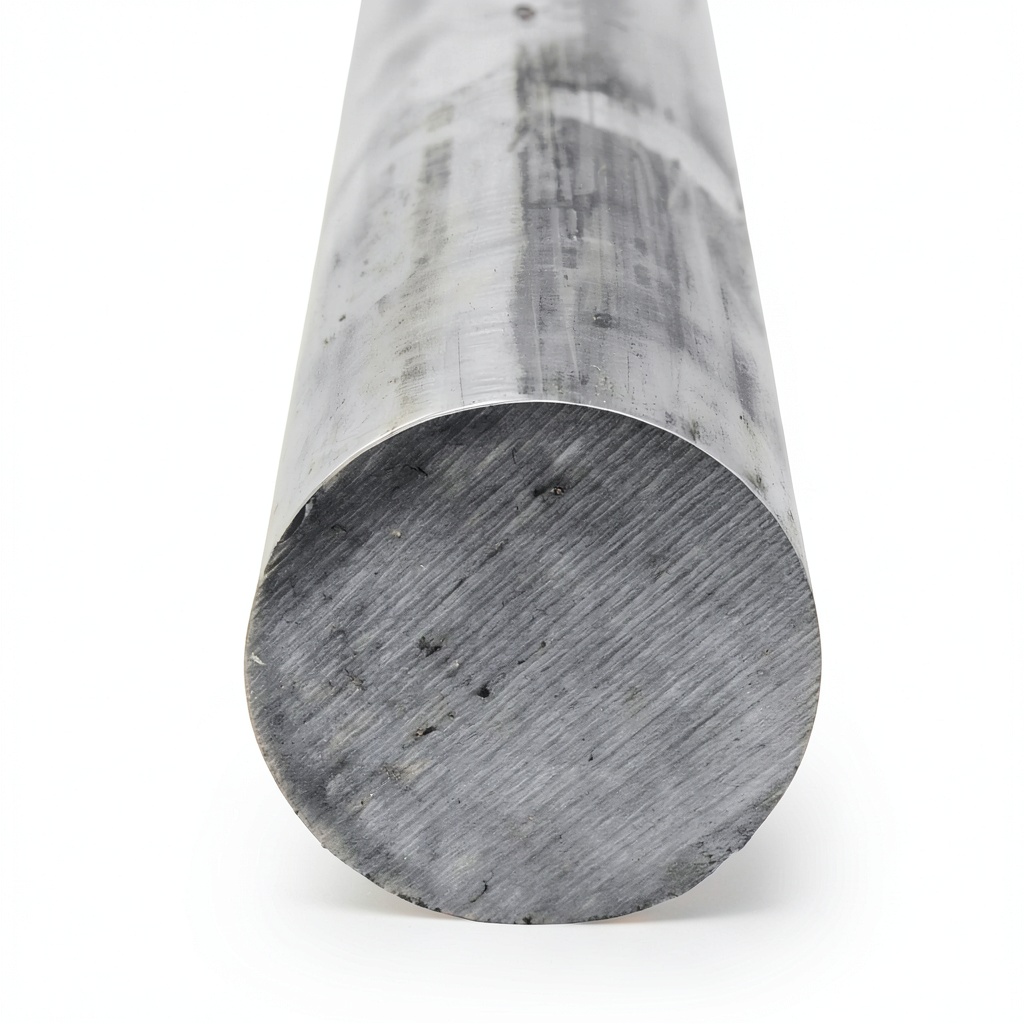 4130 Steel Rod 2 Inch Diameter 12 Inch Length on lathe with coolant” />
Pros & Cons
Advantages:
- Excellent strength-to-weight ratio – Allows for lighter designs without sacrificing performance
- Predictable machining characteristics – The normalized state eliminates surprises during fabrication
- Superior impact resistance – Handles dynamic loading better than many alternatives
- Industry standard compliance – Meets critical aerospace and industrial specifications
- Good weldability – With proper technique, produces strong, reliable joints
Limitations:
- Cost premium over carbon steel – Approximately 2-3x the price of equivalent A36 steel
- Requires proper machining technique – Not as forgiving as basic steels for beginners
- Limited corrosion resistance – Still requires protection in most environments
- Overkill for many applications – Unnecessary expense for non-critical projects
Comparison & Alternatives
Cheaper Alternative: A36 Mild Steel
A36 steel represents the most common alternative, costing roughly half the price of 4130. In my experience, A36 works perfectly fine for static structures, non-critical brackets, and prototyping where high strength isn’t required. The machinability is excellent—more forgiving of imperfect technique—and welding requires less procedure control.
When to choose A36: Budget-conscious projects, static structures, prototyping, and applications where weight isn’t a concern. The strength difference becomes noticeable under dynamic loading or in weight-sensitive applications.
Premium Alternative: 4140 Alloy Steel
4140 steel offers higher strength and better wear resistance, typically commanding a 20-30% price premium over 4130. The trade-off comes in weldability and impact resistance. I’ve found 4140 better suited for components subject to abrasion or requiring higher static strength, while 4130 performs better in applications with shock loading.
When to choose 4140: Gears, shafts, and components requiring higher surface hardness or superior wear resistance. The reduced weldability makes it less ideal for complex fabrications.
Buying Guide / Who Should Buy
Best for Beginners
If you’re new to metalworking, this 4130 steel rod offers a good introduction to alloy steels—provided you’re willing to learn proper technique. Start with simpler projects to understand how the material behaves during machining and welding. The normalized state is more forgiving than heat-treated alternatives, but still requires sharper tools and more attention to speed and feed rates than basic carbon steel.
Best for Professionals
For engineers and professional fabricators, this material represents a reliable choice for critical components. The standards compliance and consistent quality justify the price premium when failure isn’t an option. I’ve consistently used similar material for aerospace components, custom automotive parts, and specialized machinery where the properties of 4130 provide the right balance of strength, machinability, and weldability.
Not Recommended For
Avoid this material if: You’re working on budget-constrained projects where A36 would suffice, you need maximum corrosion resistance (consider stainless steel instead), or you’re looking for the highest possible strength (where 4140 or 4340 might be better choices). Also reconsider if you lack experience with alloy steels—the learning curve can be expensive in terms of both material waste and tooling costs.
FAQ
How does normalized 4130 compare to annealed or hardened conditions?
Normalized 4130 offers a balance between machinability and strength. Annealed material is softer and easier to machine but lacks the strength of normalized. Hardened 4130 provides superior strength but is difficult to machine and requires heat treatment after welding. For most applications, normalized represents the practical compromise.
Can this be welded to other types of steel?
Yes, but with considerations. Welding 4130 to carbon steel typically works well using ER70S-2 filler rod. When joining to stainless steel, you’ll need appropriate filler metal and should consider the different thermal expansion characteristics. Always test your procedure on scrap material first.
What’s the realistic weight capacity for a 2-inch diameter rod?
In tension, a 2-inch diameter 4130 rod can safely support approximately 165,000 pounds ultimate load (assuming ~81,200 psi tensile strength). For dynamic applications or safety-critical components, always apply appropriate safety factors—typically 2:1 for general machinery up to 4:1 or higher for aerospace applications.
Is the price premium over A36 steel justified?
Only for specific applications. If you need the strength-to-weight ratio, impact resistance, or industry standard compliance, the premium is absolutely justified. For general fabrication where these properties don’t matter, you’re better off with A36.
What’s the best way to cut this material?
For clean cuts, I recommend band sawing with a bi-metal blade running at moderate speed. Abrasive cutting works but can affect the heat-affected zone. Plasma cutting is possible but will require machining the cut edge if precision is needed.